


“Unidentified Human Relative”: Little Foot, One Of Most Complete Early Hominin Fossils, May Be New Species
“Unidentified Human Relative”: Little Foot, One Of Most Complete Early Hominin Fossils, May Be New Species
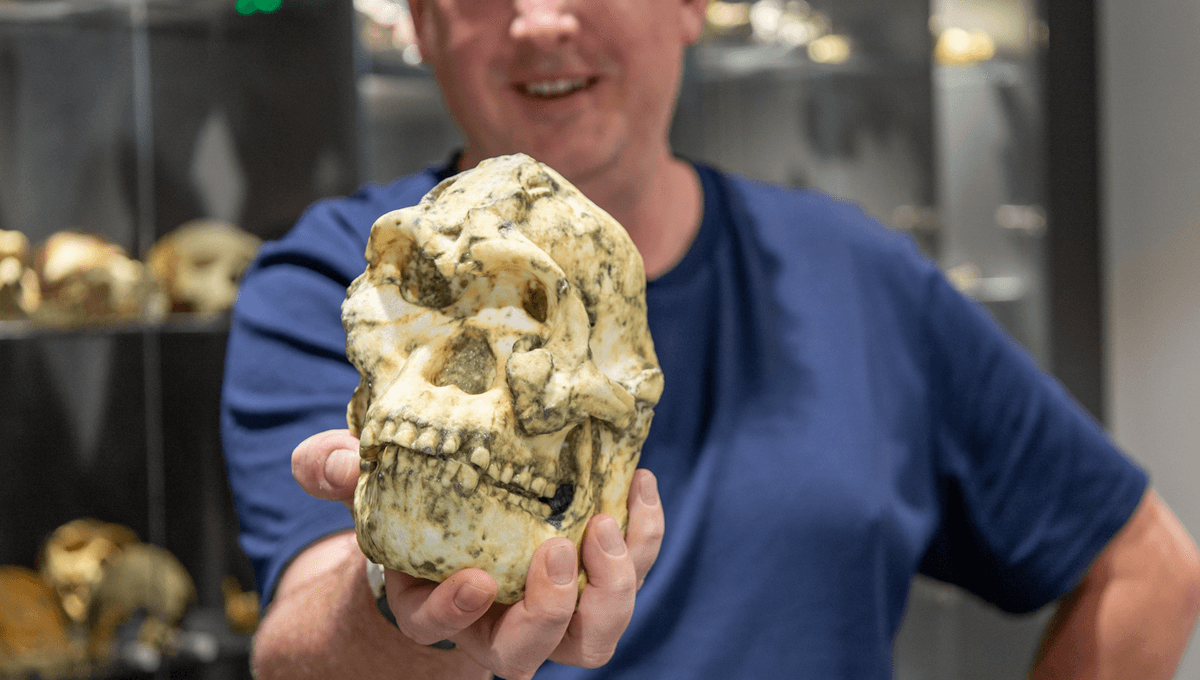
Another twist has been added to the puzzling mix that is early human ancestry with evidence that one of the most complete pre-human fossil skeletons we have found doesn’t belong to any recognized species. The team who made the discovery say they don’t know where StW 573, nicknamed Little Foot, fits from an evolutionary perspective, but at least with a specimen this intact we have plenty of opportunity to learn more.
The rest of this article is behind a paywall. Please sign in or subscribe to access the full content. To understand the newly published claims, it’s important to know a little about the confusing hominins that roamed southern Africa more than 2 million years ago. The best-known species from this era and time is Australopithecus africanus, although whether they are ancestral to modern humans remains debated. In 1948, fossils found at Makapansgat in South Africa were described as a new species, Australopithecus prometheus, because they were thought to have used fire. Today, Dr Jesse Martin of Latrobe University told IFLScience, most paleoanthropologists consider this to be an error. The fossils identified as A. prometheus are so similar to A. africanus that the dominant view holds the two could easily have interbred and belong to one species, but some cling to A. prometheus’s unique identity. In 1998, a spectacular find was made in Sterkfontein, South Africa, which has proven to be one of the most complete specimens ever found from an extinct hominin. Extraction of such an extensive skeleton from solid rock was slow. When Ronald Clarke examined the Little Foot skeleton in 2019, he noted similarities to the original Makapansgat fossils and reported this fossil wonder as belonging to A. prometheus. Martin told IFLScience most of the paleontological community concluded this just meant A. africanus, since they considered the two to be interchangeable. Martin and his students thought the same until they started examining part of Little Foot’s skull that matches the fragment on which the original description of A. prometheus was made back in 1948. When it comes to human diversity, specifically in South Africa, the story gets more complex every time you put a trowel in the ground. Dr Jesse Martin The team found three major differences just in this one area of the back of the skull. When it comes to skull shape, Little Foot has more in common with much older hominins than those originally known as A. prometheus, or those universally recognized as A. africanus. Yet Little Foot clearly has features elsewhere that could not make it a late survivor of some more ancient species; it must be something new. “This fossil remains one of the most important discoveries in the hominin record and its true identity is key to understanding our evolutionary past,” Martin said in a statement. “We know there are two hominin species living in the area at this time,” Martin told IFLScience. “But we don’t know where Little Foot fits in the family tree; we don’t know its history and if anything evolved from it. When it comes to human diversity, specifically in South Africa, the story gets more complex every time you put a trowel in the ground.” After all, we still have no idea where Homo naledi, found 2.2 kilometers (1.4 miles) from Little Foot’s cave, fits, given its odd mix of ancient and more modern features. Even Little Foot’s age is heavily debated. One method gives an estimate of 2.6 million years, the other more than 3 million, and papers have been published arguing why each is more likely to be right. “We think it's demonstrably not the case that it’s A. prometheus or A. africanus. This is more likely a previously unidentified, human relative,” Martin said. “Dr Clarke deserves credit for the discovery of Little Foot, and being one of the only people to maintain there were two species of hominin at Sterkfontein. Little Foot demonstrates in all likelihood he's right about that. There are two species.” The team has not named the new species, both because they have described so little of the fossil and because they wish to be consultative. “The next step is to assess the entirety of the fossil to determine what species Little Foot represents,” Martin said to IFLScience. He noted there is also a need to go through all the specimens now placed as A. africanus, to see if any fit better with Little Foot than their existing designation. The key differences between Little Foot’s skull and A. africanus include the way the sutures join, a sagittal crest more similar to males of much larger species like gorillas, and a pronounced bump known as the external occipital protuberance. Martin notes that as recently as the 1970s, “It was still commonly believed there could only be one hominin [species] in the world at one time. Now we know there were different genus co-existing." Martin himself was responsible for revealing that our own genus lived beside two other hominins. “We think it’s normal for us to be the only ones, but really our situation is aberrant,” Martin added, noting that we know from the history of other life forms that being the only survivor of a genus is not a good sign for a species’ survival. The study is open access in the American Journal of Biological Anthropology.

 English
 French
 Spanish
 Portuguese
 Deutsch
 Turkish
 Dutch
Dutch
 Italiano
 Russian
 Romaian
 Portuguese (Brazil)
 Greek
Greek