


My FSR Redstone testing shows huge image quality improvements and AMD seriously taking the fight to Nvidia DLSS
My FSR Redstone testing shows huge image quality improvements and AMD seriously taking the fight to Nvidia DLSS
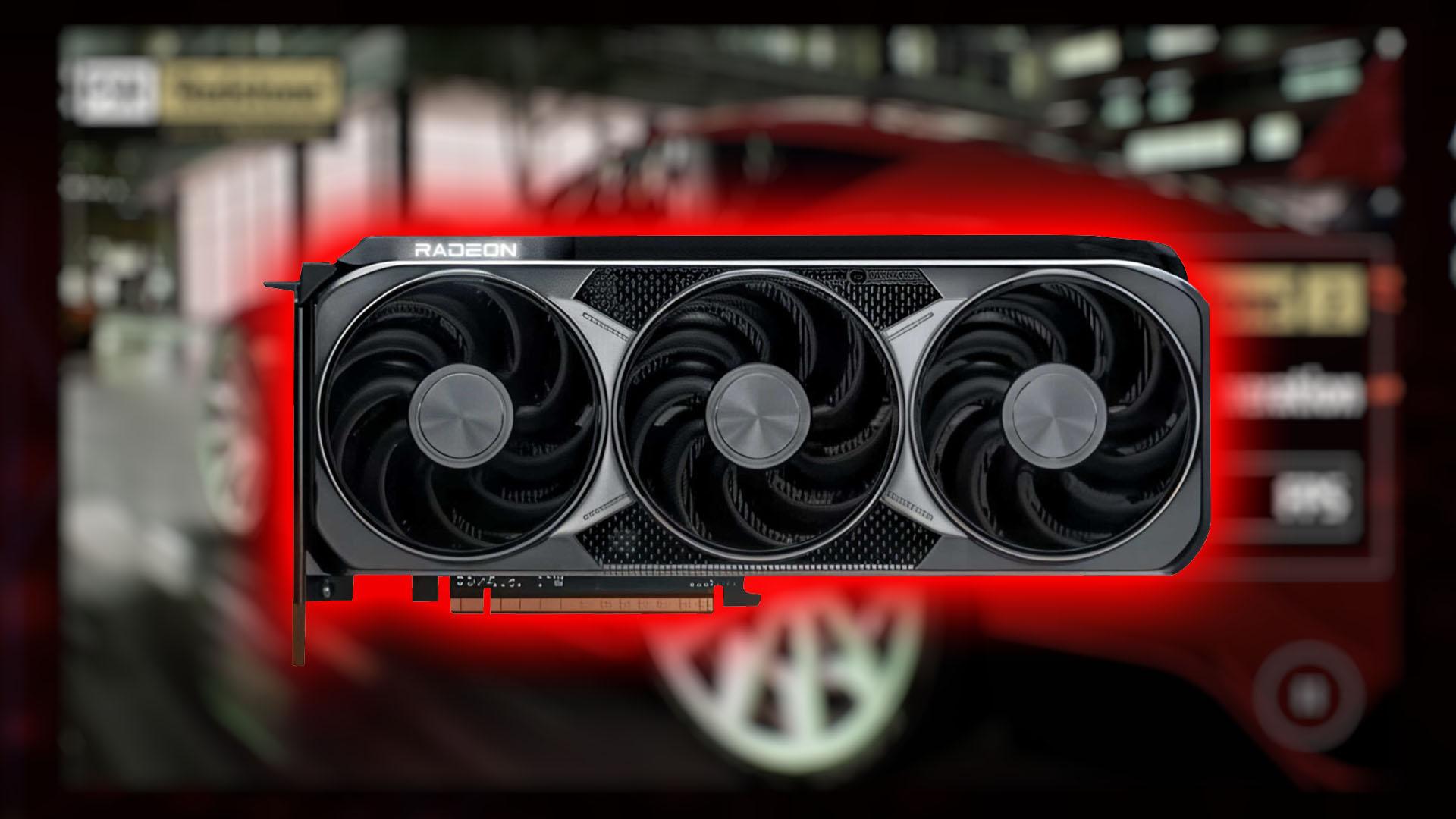
AMD FSR Redstone is finally here, and we've put it to the test. AMD's overhaul of its upscaling and frame generation software includes improvements in image quality and performance across the board, with the new addition of machine learning-based frame generation as well as new Ray Regeneration and Radiance Caching features for enhancing ray tracing performance. It finally puts the company very close to level pegging with Nvidia and its latest suite of DLSS technologies, with the ML-based frame generation being a particularly big improvement, though multi frame generation remains a missing feature.
The new AMD FSR Redstone suite launches today and is now available for developers to implement into their games, as well as for us gamers to access in the already several hundred games that support some of these features. You'll have to update to the latest driver, possibly update your games, and you may need to enable the features in AMD Software, but you should be able to try these features out for yourself without too much hassle. You'll also need to be running one of AMD's latest RNDA 4 GPUs to get access to all these features.
What is AMD FSR Redstone?
AMD FSR Redstone is a new software suite from AMD that integrates and updates all its previous AMD FidelityFX tech into a new lineup. The first of these is the newly-named FSR Upscaling, which replaces FSR 4 as the company's predominant implementation of upscaling. It's analogous to Nvidia's latest DLSS Super Resolution technology.
Next is FSR Frame Generation, which, with FSR Redstone, sees a change to using a new machine learning-based frame generation technique for greatly improved image quality. This brings AMD's frame generation tech largely in line with Nvidia's latest DLSS Frame Generation tech.

FSR Redstone also introduces two completely new technologies, the first of which is FSR Ray Regeneration. This looks to improve the quality of ray-traced reflections by using machine learning to denoise the ray-traced image. It's AMD's equivalent of Nvidia Ray Reconstruction.
Finally, there's FSR Radiance Caching, which again uses machine learning to greatly reduce the calculations needed to create ray-traced lighting effects. It's analogous to Nvidia's RTX Neural Radiance Cache.
How do I get AMD FSR Redstone?
To access AMD FSR Redstone's tech, you'll need to have an AMD Radeon RX 9000 GPU, such as the RX 9070 XT, RX 9070, or RX 9060 XT. Previous FSR tech works on most older AMD GPUs, but all the enhancements in FSR Redstone use the company's latest AI cores to perform their machine learning trickery.
Assuming you have an RX 9000 GPU, you can access the features by downloading the latest AMD driver and AMD Software app. Once the driver is downloaded, in some games you'll be able to specifically toggle on the new features. However, in some games, you'll need to use AMD Software to turn on these features.

To do this, just navigate to the Gaming tab and select the Graphics sub tab. Here, you can then enable the settings you want. By selecting to turn these features on, AMD Software will effectively override the FSR Upscaling and Frame Generation modes for games that don't otherwise support the latest features. However, those games will already need to support FSR 3.1, and again, you'll need an RX 9000 GPU for this to work.
AMD FSR Redstone Frame Generation
Jumping straight in with the most anticipated new feature of FSR Redstone, the new software introduces ML-based frame generation to the FSR suite for the first time, bringing huge image quality enhancements over previous FSR frame generation.

Effectively, the new tech works in a very similar manner to Nvidia's DLSS frame generation, in that the game feeds into the frame generation algorithm the most recently generated frame of the game, along with the previous frame, and also supplies a depth map and motion vectors for the in-game elements. The algorithm then uses a combination of two AI models and a non-AI algorithm to generate the new frames.
The tech works well, providing similar frame rate improvements to previous implementations of frame generation but with much-improved image quality, as demonstrated in the image below.

However, AMD FSR Redstone Frame Generation still doesn't include multi-frame generation, meaning Nvidia still has a distinct advantage, even if the use cases for multi-frame gen are much more limited than single-frame generation.
AMD FSR Redstone Upscaling
The least-changed aspect of FSR Redstone is AMD's upscaling algorithm, as it's the same tech as FSR 4 but just with a new name - FSR Upscaling. As we saw in our RX 9070 XT review, FSR 4 is a huge improvement over previous versions of FSR, and it finally brought AMD's upscaling just about in line with Nvidia's tech. Nvidia did then improve its upscaling even more with its transition from a CNN AI model to a transformer model, but in most practical terms, both are very good upscalers now.
AMD FSR Ray Regeneration
Brand new to FSR Redstone is Ray Regeneration. This tech looks to greatly improve the clarity and frame-to-frame consistency of ray-traced reflections by denoising the ray-traced lighting inputs.
The reason this is needed is that ray tracing lighting, as we know it, doesn't work at the same detail level as the whole scene. That is, the light rays that are calculated are relatively few compared to the number of triangles and pixels on screen. This means that when ray-traced lighting is calculated, you end up with a grainy or noisy image. A simple denoising algorithm is then used to smooth out the image, and this is fine for helping inform lighting effects when applied on top of conventional rendering, but it can ultimately result in grainy, distorted images when used for reflections.

Ray Regeneration - and Nvidia's rival Ray Reconstruction - improve this by using a machine learning algorithm to help inform the denoiser. By injecting information such as object normals and depth, diffuse/specular lighting parameters, radiance, and light visibility, the new AI-enhanced algorithm can spew out a far more detailed, smooth, and consistent image.
The result is a dramatic improvement to ray-traced reflections, which you can see in the image below. On the left is a conventional, non-ray-traced version of a mirror, in the middle is a ray-traced version without Ray Regeneration, and on the right is the image with Ray Regeneration.
The new tech works wonders not just at providing more detail and smoothing out reflections in static frames but at ensuring a more consistent result from frame to frame. This means you no longer get the distracting flickering or shimmering effects from reflections as you move past them.
This new feature is one that is now supported across all RDNA 4 GPUs - i.e. RX 9000 graphics cards - but needs to be enabled by game developers. As such, the only title including the feature so far is Call of Duty: Black Ops 7.
AMD FSR Radiance Caching
The final piece of the AMD FSR Redstone puzzle is a feature that isn't currently available to try, but which looks like it could make a huge difference to the potential performance of ray-traced games.
AMD FSR Radiance Caching pre-calculates the advanced lighting of a path-traced scene, where each light beam might interact with half a dozen surfaces or more, before finishing its path. All these calculations are computationally very expensive, which is why path-traced lighting is so impactful on frame rate.

However, by pre-calculating the lighting and using this to inform its AI algorithm ahead of time, Radiance Caching can then estimate the lighting effect from just two bounces or surface interactions when the game is running.
AMD hasn't broken down the specific impact on frame rate that Radiance Caching is expected to have, but we could see it being significant. No games yet support the feature but AMD says it will be arriving in 2026.

 Arabic
 French
 Spanish
 Portuguese
 Deutsch
 Turkish
 Dutch
Dutch
 Italiano
 Russian
 Romaian
 Portuguese (Brazil)
 Greek
Greek