15 Women Whose Notoriety Changed U.S. History - History Collection
8. Lorena Bobbitt
Image Source: Wikimedia Commons.
In 1993, Lorena Bobbitt made headlines after severing her husband’s penis, claiming years of abuse. The case led to national conversations about domestic violence, media sensationalism, and gendered justice, forever cementing her name in legal and cultural debates. Details at TIME.
9. Aileen Wuornos
Image Source: Wikimedia Commons.
Aileen Wuornos, born Aileen Carol Pittman on February 29, 1956, in Rochester, Michigan, was an American serial killer who murdered seven men in Florida between 1989 and 1990. Wuornos, a sex worker, claimed she killed these men in self-defense during attempted sexual assaults. Her troubled upbringing, marked by sexual abuse and abandonment, contributed to her criminal behavior. Convicted in 1992, she was executed by lethal injection on October 9, 2002. Her life and crimes have been the subject of various media portrayals, including the 2003 film “Monster,” which earned Charlize Theron an Academy Award for Best Actress. For more details, see Biography.com.
10. Casey Anthony
Image Source: Wikimedia Commons.
In 2011, Casey Anthony was acquitted of the murder of her two-year-old daughter, Caylee, a case that captivated the nation and sparked intense media scrutiny. The trial highlighted significant flaws in the justice system and ignited widespread debates on public perceptions of motherhood, guilt, and the influence of media sensationalism. The verdict led to public outrage and discussions about the presumption of innocence and the burden of proof in criminal cases. For more details, see NPR.
11. Angela Davis
Angela Davis stands resolute during her historic trial, symbolizing resistance and social justice activism.
Angela Davis, a scholar and activist, became a radical icon in the early 1970s. In 1970, she was charged with aiding and abetting a kidnapping and murder after a failed attempt to free the Soledad Brothers, three African American inmates accused of killing a prison guard. Although she was not present at the scene, a gun registered in her name was used in the incident. After spending 16 months in jail, Davis was acquitted of all charges in 1972. Her trial and subsequent acquittal fueled debates over race, justice, and political activism, and she remains influential in social justice movements. More at The Guardian.
12. Susan Smith
Susan Smith’s 1994 case sparked national debate on media bias, mental health, and public sympathy.
In 1994, Susan Smith gained infamy for falsely claiming her sons were kidnapped before confessing to their murder. Her story raised questions on media bias, mental health, and the power of public sympathy. Her case is detailed at CNN. It remains one of North America’s most tragic and disturbing stories of disenfranchised women.
13. Mary Surratt
Mary Surratt, boardinghouse owner, executed in 1865 for alleged role in Lincoln assassination conspiracy.
Mary Surratt, born in 1823, was a boardinghouse owner in Washington, D.C., who became the first woman executed by the U.S. federal government. She was convicted in 1865 for her alleged role in the conspiracy to assassinate President Abraham Lincoln. Her trial and execution highlighted the intense emotions and political pressures of the post-Civil War era, raising questions about justice, gender, and the rule of law. More details are available at National Archives.
14. Tonya Harding
Image Source: Pexels.
Tonya Harding, born in 1970, was a prominent American figure skater who made history in 1991 by becoming the first American woman to land a triple axel in competition. Her career took a dramatic turn in January 1994 when her ex-husband, Jeff Gillooly, orchestrated an attack on her rival, Nancy Kerrigan, aiming to eliminate her from the upcoming Winter Olympics. Harding pleaded guilty to hindering the investigation into the assault, resulting in a lifetime ban from competitive skating. The incident sparked widespread media coverage and public debate on issues of class, ambition, and media ethics, significantly influencing the portrayal of women in sports. Her story was later depicted in the 2017 film “I, Tonya.” (biography.com)
15. Anna Nicole Smith
A courtroom scene depicting Anna Nicole Smith’s lawyer, Howard K. Stern, during a high-profile celebrity trial. | Photo by Anastasia Shuraeva on Pexels
Anna Nicole Smith, born Vickie Lynn Hogan on November 28, 1967, in Houston, Texas, was an American model, actress, and television personality. She gained prominence as a Playboy Playmate in 1992 and later married 89-year-old billionaire J. Howard Marshall in 1994, leading to widespread speculation about her intentions. After Marshall’s death in 1995, Smith engaged in a prolonged legal battle over his estate, which reached the U.S. Supreme Court. Her life and death underscored the complexities of fame, inheritance law, and tabloid journalism. For more details, see CNN.
Conclusion
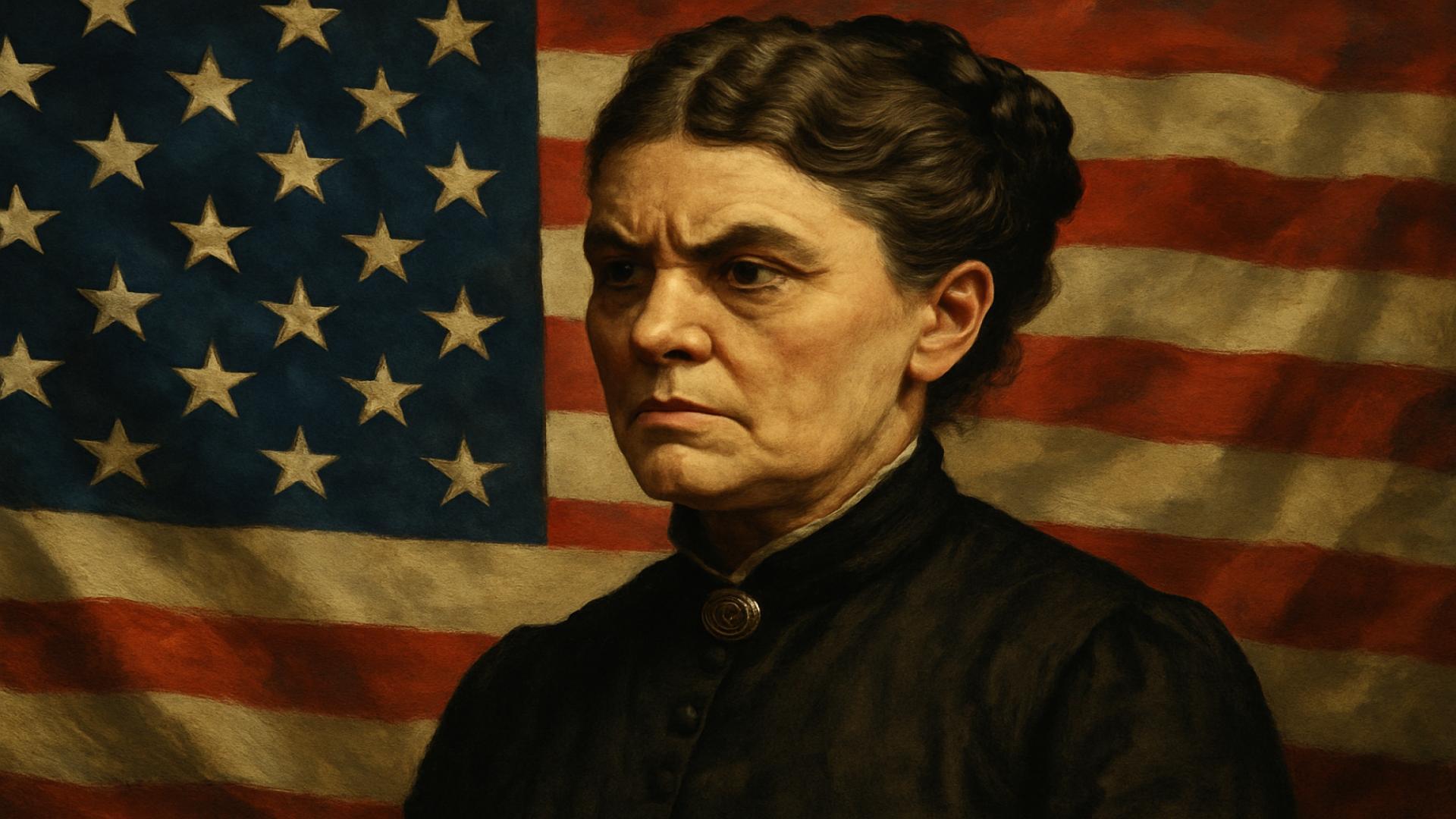
Notorious women whose scandals sparked legal reforms, social movements, and lasting cultural transformation.
Throughout American history, the notoriety of certain women has ignited profound societal shifts, leading to the enactment of new laws, the emergence of social movements, and extensive cultural discourse. Whether perceived as villains, victims, or complex figures, their stories underscore the influential role of scandal and conflict in shaping the nation’s identity and legal frameworks. These women’s legacies highlight the enduring power of individual actions to challenge societal norms and inspire transformative change.





 English
 Arabic
 Spanish
 Portuguese
 Deutsch
 Turkish
 Dutch
Dutch
 Italiano
 Russian
 Romaian
 Portuguese (Brazil)
 Greek
Greek