



 PUBLISHED
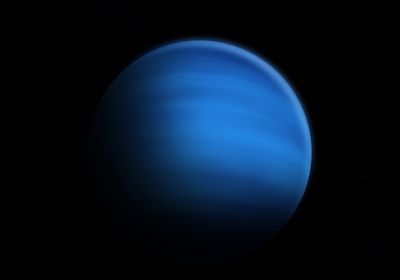

If you are anything like us you probably memorized the order of the planets in the Solar System back in school, and the older among you may still feel compelled to include Pluto even though it was downgraded a whole 19 years ago.
The rest of this article is behind a paywall. Please sign in or subscribe to access the full content. So, which is the closest planet to Earth? Well if you said Venus – according to one way of measuring the distance – you are incorrect. If you said Mars, you are even more incorrect, with the correct answer being Mercury. While Mercury is the innermost planet in the Solar System, on average it spends more time closer to Earth than Venus does. "As it turns out, by some phenomenon of carelessness, ambiguity, or groupthink, science popularizers have disseminated information based on a flawed assumption about the average distance between planets," a team wrote in a 2019 commentary on the topic. "Using a mathematical method that we devised, we determine that when averaged over time, Earth’s nearest neighbor is in fact Mercury." The team ran a simulation calculating the position of the eight planets over the course of 10,000 years, which tracked the distance between each pair of planets. In fact, the team worked out that Mercury was, on average, the closest planet to all other planets in the Solar System. "We noticed that the distance between two orbiting bodies is at a minimum when the inner orbit is at a minimum," the authors explained. "That observation results in what we call the whirly-dirly corollary (named after an episode of the cartoon Rick and Morty): For two bodies with roughly coplanar, concentric, circular orbits, the average distance between the two bodies decreases as the radius of the inner orbit decreases." "In fact," they added, "Mercury is even the closest planet to Neptune." The commentary was published in Physics Today. An earlier version of this article was published in 2023.


 English
 Arabic
 French
 Spanish
 Portuguese
 Turkish
 Dutch
Dutch
 Italiano
 Russian
 Romaian
 Portuguese (Brazil)
 Greek
Greek