


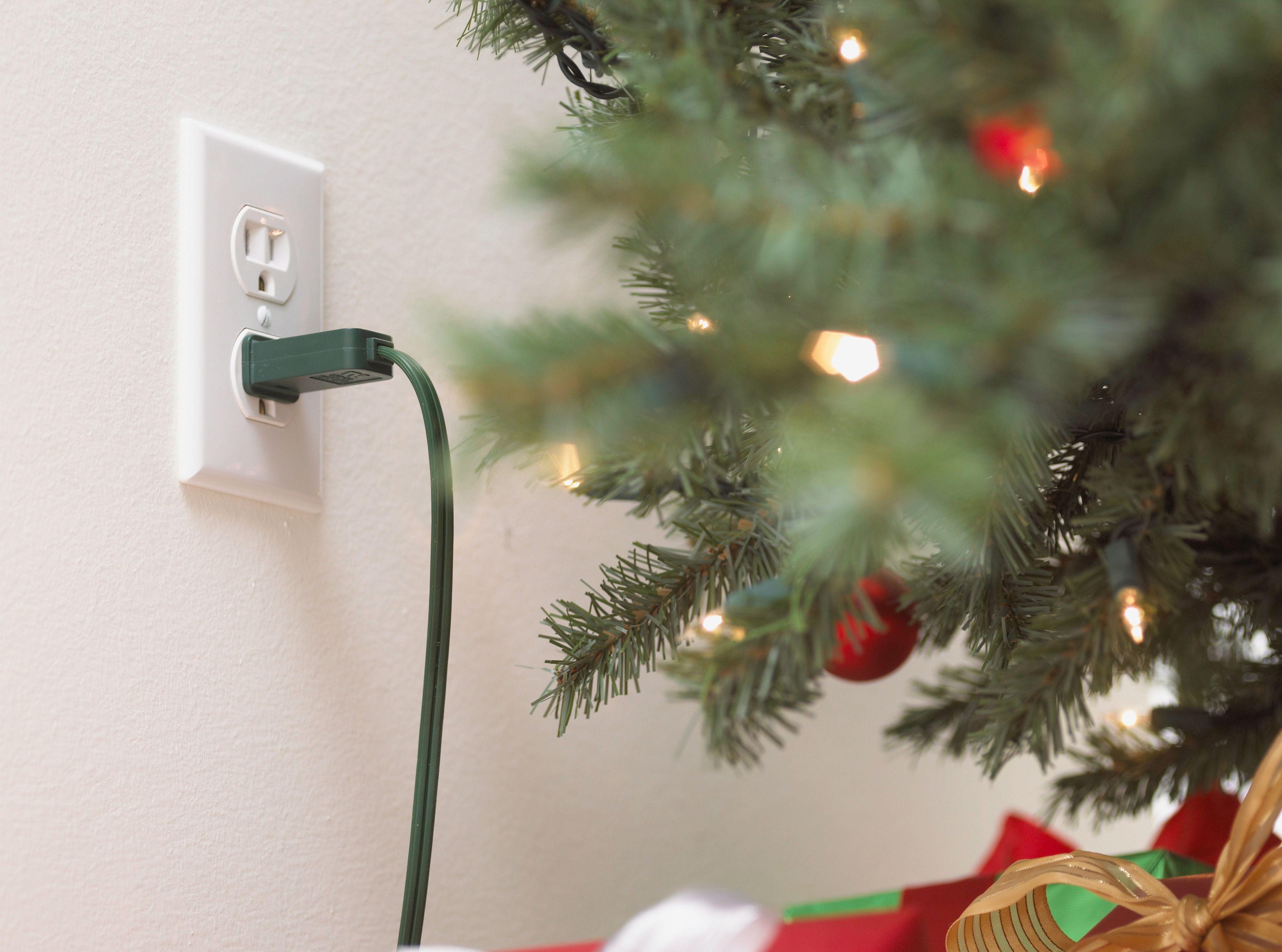
The holiday season comes with beautiful light displays, inflatable Santas, and decorated Christmas trees. But with twinkling lights and dry pine needles comes the potential for a fire hazard. About 200 Christmas trees catch fire annually. "A small number, but if it’s your home, that’s too many," says home maintenance expert Lou Manfredini.
However, there are some easy things you can do to minimize the risk of a holiday disaster. Here are three Christmas decor items experts say you should always unplug when you leave the house.
- Lou Manfredini is a home expert with Ace Hardware.
- Hommer Zhao is the founder of Wiringo.com, a cable and wire harness manufacturer that produces custom PCB and wire harness solutions.
- Leon Huang is the CEO of RapidDirect, a tech manufacturing company.
Carson Downing
1. Real Christmas Trees
"A tree should not stay plugged in for long unattended periods," says electrical expert Leon Huang. "Even LED lights can cause problems if the wiring is damaged."
Since real pine trees are incredibly flammable, unplugging the lights overnight or while you're away is safest. "A very unlikely spark could cause the tree to ignite," Manfredini says. If you're not set on having a real tree, most artificial trees are flame resistant. Manfredini says artificial trees using LED lights are fine to keep plugged in during the day.
2. String Lights
"It is much safer not to leave [string lights] plugged in all day because even good-quality lights can overheat after many hours," says cable and electrical expert Hommer Zhao. Huang agrees, explaining that keeping your lights plugged in for hours can increase heat buildup and electrical stress.
Manfredini says it's generally safe to leave string lights on during the day as long as the lights are LED. Because LED lights use less energy and stay cooler for longer, they are less of a fire hazard than other types.
Related
3. Lawn Inflatables
Inflatable lawn ornaments face weather, moisture, and wind, which can affect motors, fans, and power supplies. Since they face the elements every year, Huang says running them nonstop is not recommended. Zhao says the same, suggesting to use them for limited hours and turn them off when you're not at home.
Turning lawn inflatables on for only a few hours at a time is safer and prolongs their life. If you want to use that inflatable snowman again next year, give him a break every once in a while.
Safety Tips for Using Holiday Lights
When in doubt, unplug it: Don't just stick to our list, "Anything that draws steady power or produces heat should be unplugged," Huang says. "If you are not there to monitor it, it's better to disconnect it." Unplugging lights and motorized decor when you leave the house is an easy way to keep your home safe, but that's just the tip of the iceberg.
Use a timer: Technology can help you schedule when you want your lights to turn on and off. "Timers can improve safety because they prevent lights from running too long," Huang says. They prevent overheating, reducing the fire hazard that comes with holiday lights and decor.
Check your cords: Ensuring your cords and power strips are safe to use all season long is vital too. "Check for damaged wires, loose plugs, or cheap adapters. Simple things like using a certified power strip or keeping wires away from heat sources can actually make a big difference," Zhao says. Anything with frayed wires or out-of-date labels should be safely tossed.
Pay attention to power load: "Avoid plugging too many decorations into one outlet," Huang says. LED lights are nice because you can plug multiple strands into each other for a longer string, but make sure they feed to a plug-in that can handle the energy load.
Protect outdoor lights: "For outside lighting, make sure you protect the connection points," Manfredini says. Use clam shell-type products to keep water from getting into the connection point and shorting out the lights.

 Arabic
 French
 Spanish
 Portuguese
 Deutsch
 Turkish
 Dutch
Dutch
 Italiano
 Russian
 Romaian
 Portuguese (Brazil)
 Greek
Greek