


 PUBLISHED

These days, the humble hippo is found exclusively in sub-Saharan Africa, but that hasn’t always been the case – thousands of years ago, the river horse also inhabited central Europe, for far longer than we once thought.
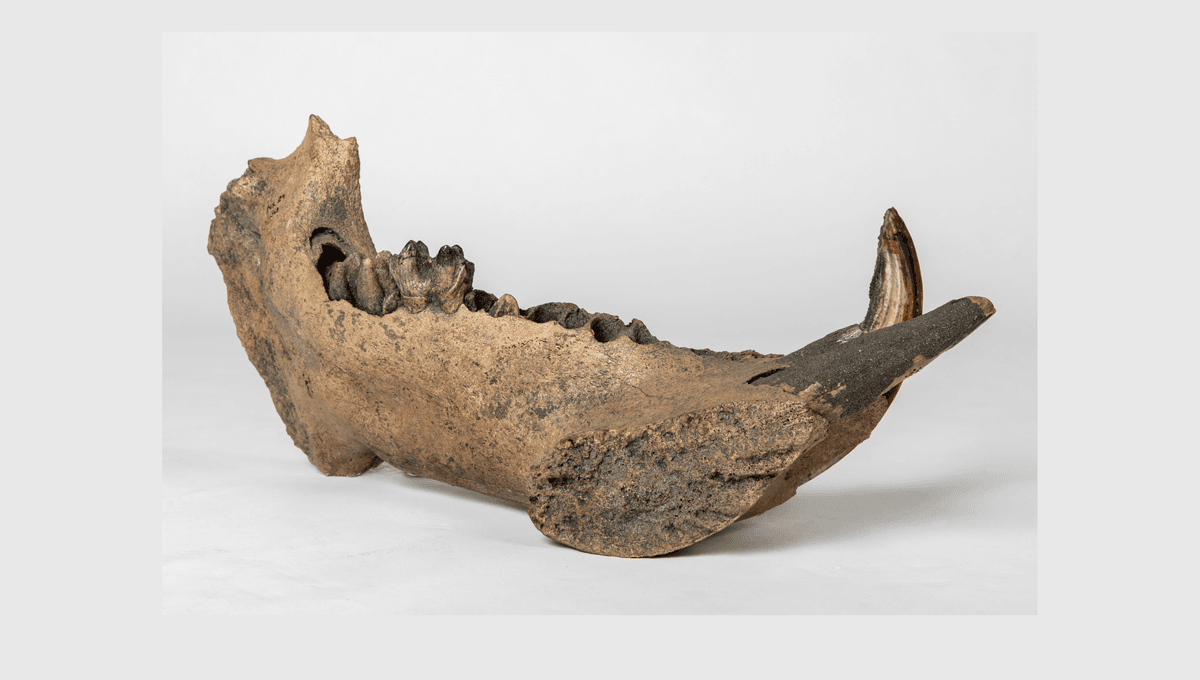
The rest of this article is behind a paywall. Please sign in or subscribe to access the full content. During the Middle and Late Pleistocene, some 780,000 to 12,000 years ago, Europe’s climate oscillated between periods of freezing temperatures and warmer interludes, which allowed hippopotamuses to migrate out of Africa in multiple waves. At their peak geographic distribution, hippos ranged from the British Isles in the northwest to the Iberian and Italian peninsulas in the south. It was previously assumed that the surprisingly airborne mammals went extinct in Central Europe about 115,000 years ago, as conditions became less favorable with the onset of the last ice age. However, a new analysis of fossils from Germany demonstrates that this was not the case. According to bone finds from the Upper Rhine Graben in southwestern Germany, hippos were still around until sometime between 47,000 and 31,000 years ago, well into the last ice age. Radiocarbon dating the fossils of 19 hippos confirmed their presence in central Europe during a milder climatic phase in the middle Weichselian – which spanned from around 47,000 until 31,000 years ago. This places them in the same place and time period as woolly mammoths and woolly rhinos. Meanwhile, ancient DNA sequencing showed that the European ice age hippos belonged to the same species as modern African hippos (Hippopotamus amphibius), and that there was a very low genetic diversity in this population, suggesting it was small and isolated. “The results demonstrate that hippos did not vanish from middle Europe at the end of the last interglacial, as previously assumed,” first author Dr Patrick Arnold said in a statement. “Therefore, we should re-analyze other continental European hippo fossils traditionally attributed to the last interglacial period.” The revelations are not just limited to hippos, as Professor Wilfried Rosendahl added: “The current study provides important new insights which impressively prove that ice age was not the same everywhere, but local peculiarities taken together form a complex overall picture – similar to a puzzle. It would now be interesting and important to further examine other heat-loving animal species, attributed so far to the last interglacial.” The study is published in Current Biology.


 Arabic
 French
 Spanish
 Portuguese
 Deutsch
 Turkish
 Dutch
Dutch
 Italiano
 Russian
 Romaian
 Portuguese (Brazil)
 Greek
Greek