


 PUBLISHED

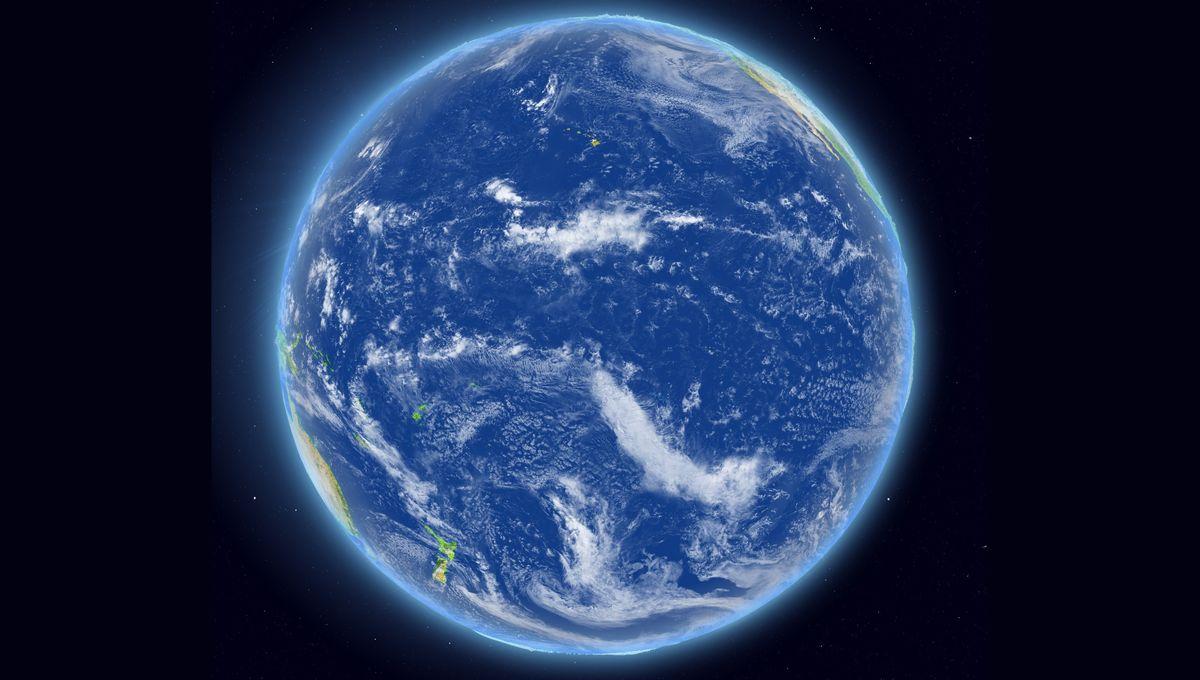
When we look at maps of the world, landmasses seem to be well distributed. Sure, there is more water than landmasses, but they are all spread out. Well, not really. If you grab a globe and turn it towards the Pacific Ocean, you can angle it in a way that the only thing you can see is water. On the opposite side, you can see plenty of land, if you focus on Africa, Europe, and Asia. So the question is, why are all the continents bunching up?
The rest of this article is behind a paywall. Please sign in or subscribe to access the full content. We can blame it all on Pangea, and mostly on the supercontinent cycle. If we need to be nitpickers, the continents are actually still spreading out. The Atlantic Ocean is getting bigger and pushing the Americas away from Europe and Africa. Still, they have not spread to a more equal distribution around the globe, and they might never get to that point. Every 300 to 500 million years, most of the continents end up being in a supercontinent, a vast region made of multiple tectonic plates above sea level. You need to have at least 75 percent of all landmasses in your supercontinent for it to qualify. Despite Europe, Asia, and Africa being attached to each other, they only cover 57 percent of Earth’s total area. Pangea is the last supercontinent to have existed, and it lasted from 336 million years ago to 175 million years ago. We are still dealing with the breakup of Pangea. And most famously, we can see how well the coasts of South America and Africa fit together. Before Pangea, there was Gondwana (not always recognized as a supercontinent) and many, many more whose names are not quite as popular with the public. The moral is that the forces of continental drift shift the continents across the surface of the Earth. Over hundreds of millions of years, continents are pulled together, forming supercontinents, and then the supercontinent breaks apart just as easily as it came together. So over the next several tens of millions of years, things will get less bunched up, with Eurasia moving east and the Americas moving west. Afterwards, things might get cozy again, with a future supercontinent beginning to form. Until then, it is possible to see Earth as a big blue marble, with few landmasses – you just need to be in orbit over the South Pacific, an ocean so big it has its own antipodes. There, the pale blue dot is actually a deep blue sphere.


 English
 French
 Spanish
 Portuguese
 Deutsch
 Turkish
 Dutch
Dutch
 Italiano
 Russian
 Romaian
 Portuguese (Brazil)
 Greek
Greek